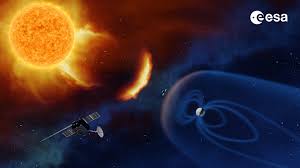
Scientists have launched the first batch of a novel type of radiation monitor into the atmosphere as part of a project to enhance space weather models.
Space weather refers to changing conditions in near-earth space. Magnetic fields, radiation, particles and matter, which have been ejected from the sun, can interact with the earth’s upper atmosphere and surrounding magnetic field to produce a variety of effects.
The most recognisable and visible space weather effect is the northern and southern lights. However, space weather can also threaten national infrastructure, navigation technology such as Global Positioning System (GPS) and radio bands up to the GHz frequencies.
Live observations
The monitors, developed by the University of Surrey, were attached to weather observation balloons and released from ground level to rise to more than 100,000 feet, capturing live observations of radiation levels as they travelled through the earth’s atmosphere and towards the stratosphere.
The launch was a test to check the theory worked by comparing data on background radiation levels with existing ground-based monitoring equipment.
The Met Office has already been measuring space weather since the 1980s, when it installed an instrument on a Concorde plane. The new model is much lighter, meaning it can be attached to balloons and reach altitudes more than twice that of typical commercial aircraft levels.
Future launches will take place during space weather events to improve understanding of how space weather influences radiation levels from high in the atmosphere to ground level.